VAT status is unconfirmed. Confirm current availability, eligibility and the final total with the clinic.
₩120,000VAT status unconfirmed
Unit comparison unavailable: confirm model / quantity / packageClinic minimum: unconfirmedOperator / eligibility: see conditions; unspecified terms are unconfirmed
VAT status is unconfirmed. Confirm current availability, eligibility and the final total with the clinic.
₩250,000VAT status unconfirmed
Unit comparison unavailable: confirm model / quantity / packageClinic minimum: unconfirmedOperator / eligibility: see conditions; unspecified terms are unconfirmed
The listed redness-mode amount is the total mode price, not an add-on fee. Confirm suitability. VAT status is unconfirmed. Confirm current availability, eligibility and the final total with the clinic.
₩150,000VAT status unconfirmed
Unit comparison unavailable: confirm model / quantity / packageClinic minimum: unconfirmedOperator / eligibility: see conditions; unspecified terms are unconfirmed
Confirm current availability, eligibility and the final total with the clinic.
Confirm price validity with the clinic.
₩500,000VAT 10% excluded
Total incl. VAT: ₩550,000
Unit comparison unavailable: confirm model / quantity / packageClinic minimum: unconfirmedOperator / eligibility: see conditions; unspecified terms are unconfirmed
body BBL Both arms OR Neck / Chest / Shoulders OR Both calves one area from the list
Body · choose ONE: both arms OR neck/chest/shoulders OR both calves
Price conditions
Confirm current availability, eligibility and the final total with the clinic.
Confirm price validity with the clinic.
₩600,000VAT 10% excluded
Total incl. VAT: ₩660,000
Unit comparison unavailable: confirm model / quantity / packageClinic minimum: unconfirmedOperator / eligibility: see conditions; unspecified terms are unconfirmed
Unit comparison unavailable: confirm model / quantity / packageClinic minimum: unconfirmedOperator / eligibility: see conditions; unspecified terms are unconfirmed
VAT status is unconfirmed. Whole package price; not a price for each component. Confirm current availability, eligibility and the final total with the clinic.
₩250,000VAT status unconfirmed
Unit comparison unavailable: confirm model / quantity / packageClinic minimum: unconfirmedOperator / eligibility: see conditions; unspecified terms are unconfirmed
Whole package price; not a price for each component. VAT status is unconfirmed. Confirm current availability, eligibility and the final total with the clinic.
₩1,650,000VAT status unconfirmed
Unit comparison unavailable: confirm model / quantity / packageClinic minimum: unconfirmedOperator / eligibility: see conditions; unspecified terms are unconfirmed
Whole package price; not a price for each component. Confirm current availability, eligibility and the final total with the clinic.
Confirm price validity with the clinic.
₩800,000VAT 10% excluded
Total incl. VAT: ₩880,000
Unit comparison unavailable: confirm model / quantity / packageClinic minimum: unconfirmedOperator / eligibility: see conditions; unspecified terms are unconfirmed
Face BBL (pigmentation + firmness + redness : three modes in one session)
Face · pigment + tightening + redness · three BBL modes
Price conditions
Whole package price; not a price for each component. Confirm current availability, eligibility and the final total with the clinic.
Confirm price validity with the clinic.
₩1,100,000VAT 10% excluded
Total incl. VAT: ₩1,210,000
Unit comparison unavailable: confirm model / quantity / packageClinic minimum: unconfirmedOperator / eligibility: see conditions; unspecified terms are unconfirmed
body BBL Both arms + Both calves + Neck / Chest / Shoulders
Body · both arms + both calves + neck/chest/shoulders
Price conditions
Whole package price; not a price for each component. Confirm current availability, eligibility and the final total with the clinic.
Confirm price validity with the clinic.
₩1,700,000VAT 10% excluded
Total incl. VAT: ₩1,870,000
Unit comparison unavailable: confirm model / quantity / packageClinic minimum: unconfirmedOperator / eligibility: see conditions; unspecified terms are unconfirmed
whole body BBL : Face, Neck, Trunk, Shoulders, Arms, Full legs
Whole body · face + neck + trunk + shoulders + arms + legs
Price conditions
Whole package price; not a price for each component. Confirm current availability, eligibility and the final total with the clinic.
Confirm price validity with the clinic.
₩3,000,000VAT 10% excluded
Total incl. VAT: ₩3,300,000
Unit comparison unavailable: confirm model / quantity / packageClinic minimum: unconfirmedOperator / eligibility: see conditions; unspecified terms are unconfirmed
Listed clinic prices, not a confirmed quote. Check current eligibility, numbing and aftercare before booking. No clinic ranking is implied.
What it is
Filtered broad-spectrum light targets selected chromophores. Filter, fluence, pulse duration, cooling and skin tone all affect treatment.
Who it may suit
People with a clinician-confirmed pigment, redness, texture, pore or scar concern suited to the selected wavelength or device.
Who needs extra review
Recent tanning, active infection, photosensitising medication, uncontrolled skin disease or a high pigment-change risk require medical review.
Planning and results
Common areas
Face, neck, chest or body depending on indication and device
Sessions
Often planned as a series because pigment, redness, scars and pores respond differently. Diagnosis comes before session count.
When results may appear
Redness or darkening can appear first. Improvement may develop over weeks and often requires more than one visit.
Downtime
Redness and darkening of treated spots can occur; blistering or pigment change is possible.
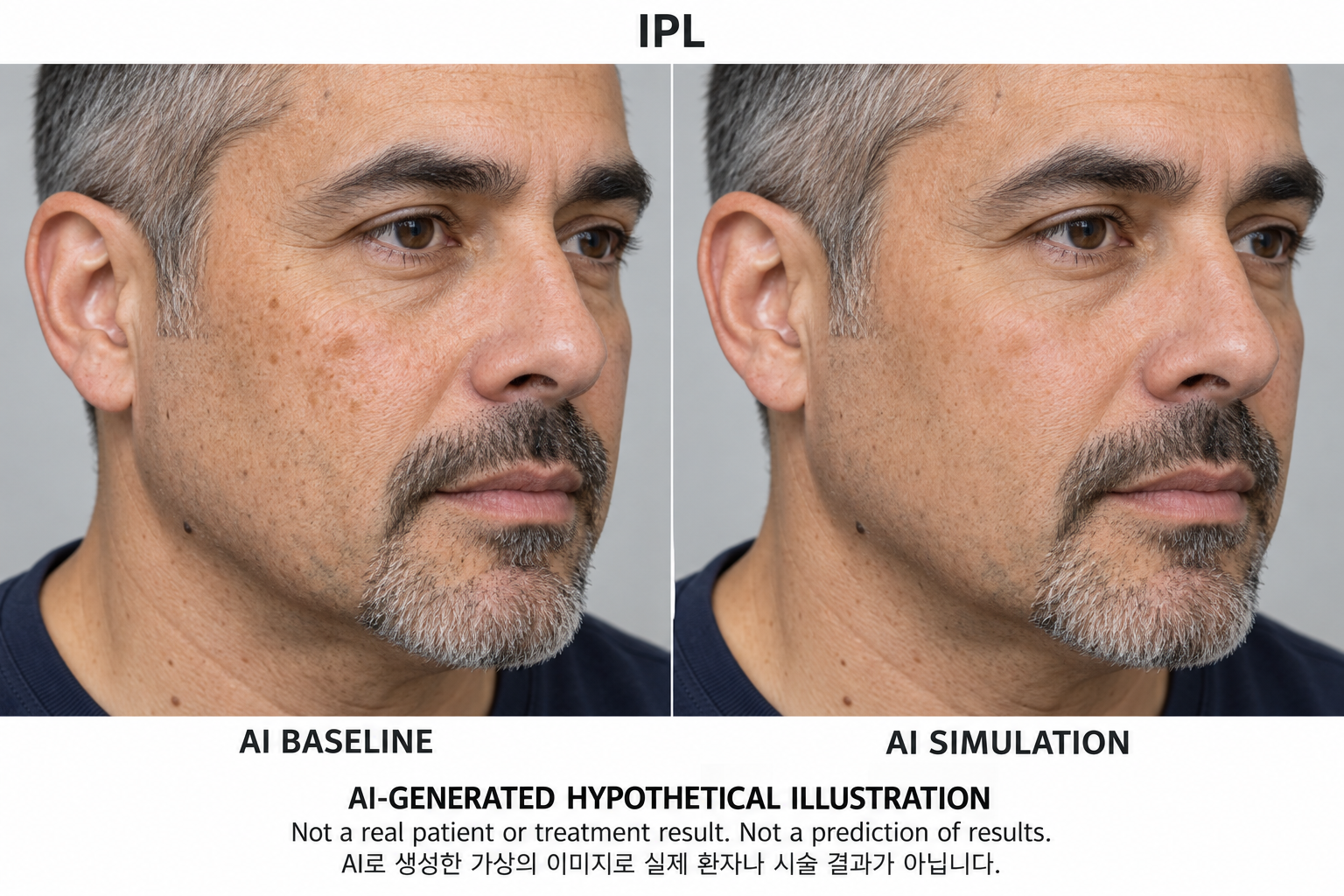
AI hypothetical comparison
This fictional AI comparison illustrates an area or concern discussed on this page. The difference is simulated. It does not show an actual treatment result or predict your results. Suitability, possible outcomes and risks require an individual clinical assessment.
AI-generated hypothetical illustration. Not a real patient or treatment result. Not a prediction of results.
Potential advantages
Can address more than one superficial color concern in a session
Large treatment area
Often planned with limited downtime
Limitations & risks
Not a true laser and not ideal for every pigment disorder
Recent tanning increases risk
Burns and pigment change can occur
Before your visit
Ask for the diagnosis, exact device, wavelength or tip, settings approach, expected downtime and sun-avoidance plan.
After treatment
Use strict sun protection and follow wound-care advice. Report blistering, increasing pain, infection signs or unexpected pigment change.