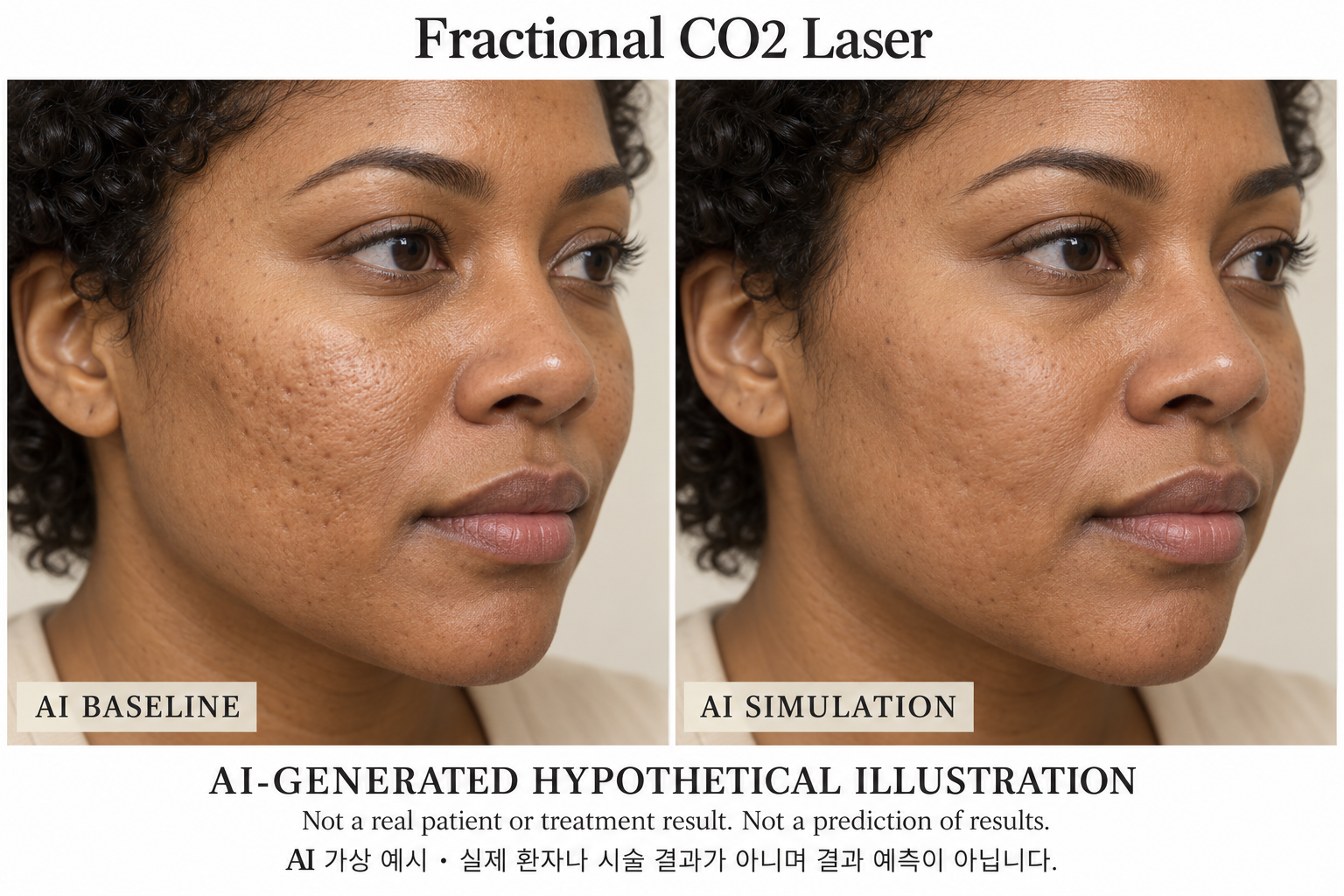

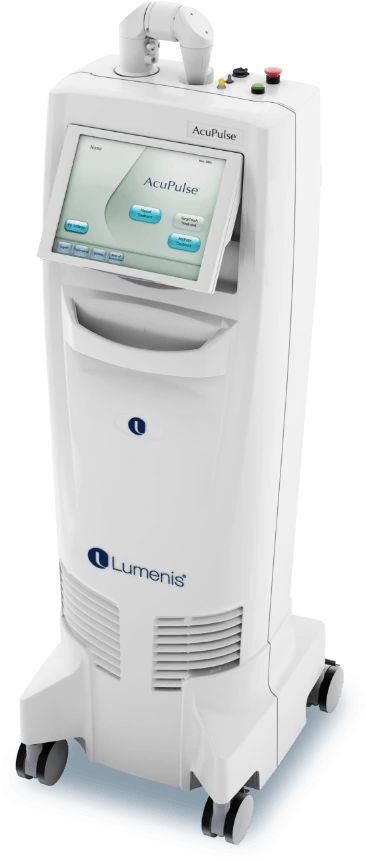
What it is
An ablative laser that creates microscopic treatment columns for selected scar, texture or resurfacing plans.
A 10,600 nm CO2 laser removes microscopic columns of tissue while leaving intervening skin. Density, depth and passes determine intensity.
Who it may suit
People with a clinician-confirmed pigment, redness, texture, pore or scar concern suited to the selected wavelength or device.
Who needs extra review
Recent tanning, active infection, photosensitising medication, uncontrolled skin disease or a high pigment-change risk require medical review.
Planning and results
- Common areas
- Face or selected scar areas after assessment
- Sessions
- Often planned as a series because pigment, redness, scars and pores respond differently. Diagnosis comes before session count.
- When results may appear
- Crusting and redness come before improvement. Texture or scar change is assessed after healing and collagen remodelling, not during the first days.
- Downtime
- Several days or longer of redness, crusting and wound care may be expected depending on intensity.
Pricing and current promotions
Same price as Korean locals — no foreigner markup. GREY does not charge a booking fee or add a markup.
Prices change with each clinic's monthly promotions and the exact product, device, dose, shots or treatment area. Message us for today's clinic rate.
Potential advantages
- Can address selected texture and scar concerns
- Fractional delivery leaves untreated skin between columns
- Settings can be adjusted to treatment goal
Limitations & risks
- More downtime than non-ablative options
- Infection, prolonged redness, pigment change and scarring are possible
- Skin tone and recent sun exposure require careful planning
Before your visit
Ask for the diagnosis, exact device, wavelength or tip, settings approach, expected downtime and sun-avoidance plan.
After treatment
Use strict sun protection and follow wound-care advice. Report blistering, increasing pain, infection signs or unexpected pigment change.
Questions to ask
- What density, depth and recovery should I expect?
- Do I need antiviral or other preventive medication?
- What wound care and sun avoidance are required?
Frequently asked questions
How long does Fractional CO2 Laser usually take?
Usually 20–90 minutes including preparation and cooling; larger or more intensive areas take longer.
How many Fractional CO2 Laser sessions might I need?
Often planned as a series because pigment, redness, scars and pores respond differently. Diagnosis comes before session count.
When might I notice a change after Fractional CO2 Laser?
Crusting and redness come before improvement. Texture or scar change is assessed after healing and collagen remodelling, not during the first days.